Baku
Absheron, Azerbaijan
- Trips here
- On request
- From
- On request
- Next departure
- On request
- Country
- Azerbaijan
Practical facts for Baku
Season, route in, and what an Indian passport needs at the border. Rules change — confirm the visa position close to your departure.
Best time to go
April to June and September to October: warm, dry and comfortable for walking the old city. July and August are hot (mid-to-high thirties) and humid on the coast. Winter is mild but the Caspian wind — Baku means something close to "city of winds" in local usage — makes it feel much colder than the thermometer says.
Getting there
Baku (GYD) is non-stop from Delhi in about four and a half hours on Azerbaijani and Indian carriers, with seasonal services from Mumbai; otherwise one-stop via Dubai, Doha or Istanbul. Heydar Aliyev airport is twenty kilometres north-east of the centre. Azerbaijan is 1h30 behind India.
Good to know
Visa before travelVisa: Indian nationals need an e-visa, applied for through Azerbaijan's ASAN Visa portal. Single entry, 30 days, normally issued within three working days (an urgent option turns it round in a few hours for a higher fee). Print the approval — it is checked at the airline desk.
- Currency:
- Azerbaijani manat (AZN). Cards work in the city; carry cash for Gobustan, taxis and the villages.
- Rough daily budget:
- ₹2,500–4,000 per person for meals and transport outside a package. Baku is more expensive than Almaty or Tbilisi and cheaper than Dubai.
No fixed dates in Baku yet
We run Baku privately, on your dates, until the fixed departures are set.
Ask us for Baku dates
We publish a departure only once the season, the stay and the guide are settled. Until then we run private versions — same leaders, your dates.
- A planner calls you back, usually the same working day.
- Tell us the month and we will say if it is the wrong one.
- You hear from us first when the fixed dates go live.
Talk it through first
A planner calls you back, no obligation.
What to know about Baku
Baku sits on a bay of the Caspian Sea about 28 m below sea level, which makes it the lowest-lying national capital on earth. Its wealth came out of the ground: this was the world's leading oil-producing region at the turn of the twentieth century, and the second boom after 1994 paid for the skyline you see now.
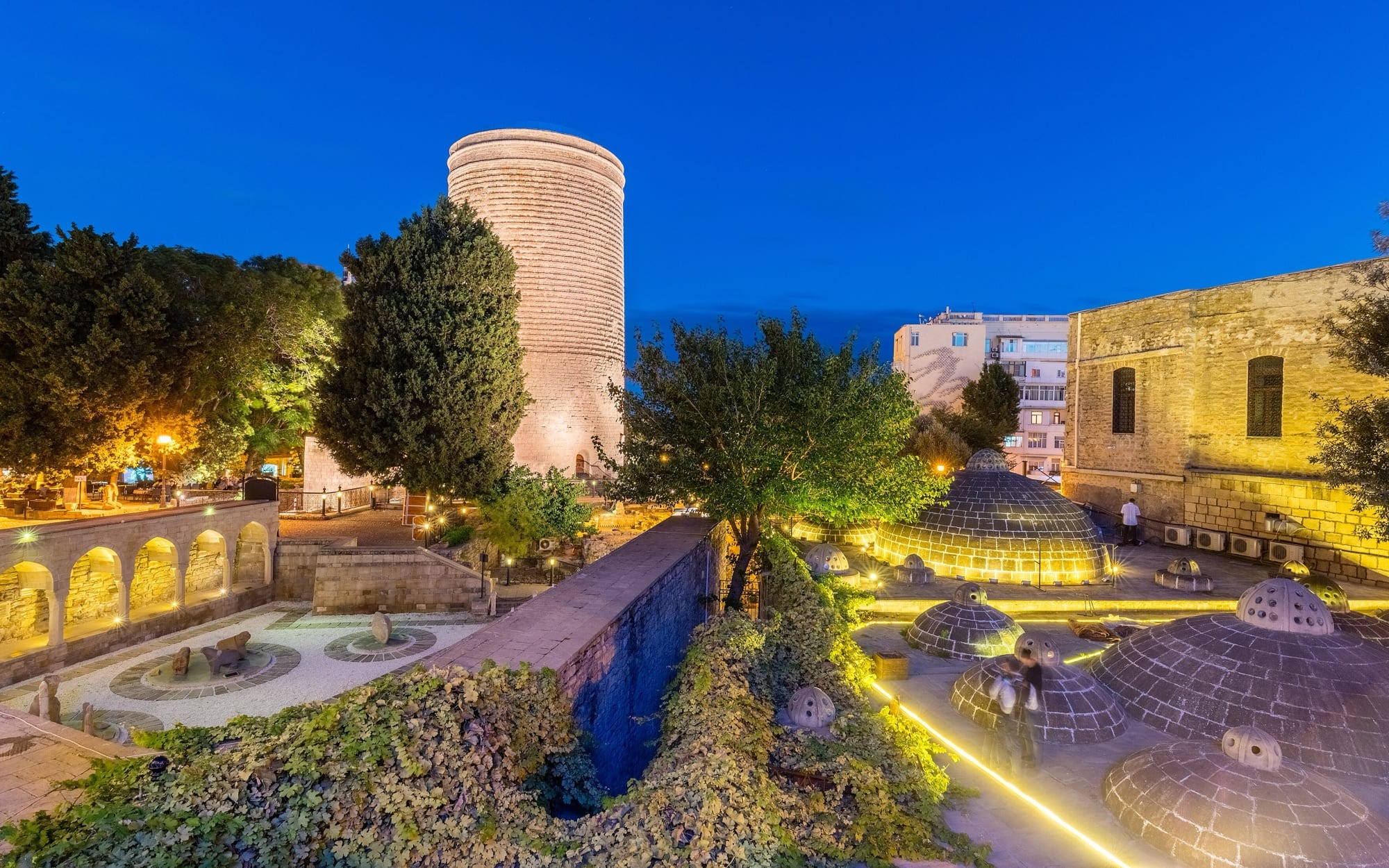
The old city, Icherisheher, is walled, compact and a UNESCO World Heritage Site. Inside it are the Maiden Tower — a cylindrical stone structure whose purpose is still argued over — and the fifteenth-century Palace of the Shirvanshahs. Immediately outside, the Flame Towers stand over the ridge and light up after dark, and the Heydar Aliyev Center, Zaha Hadid's white wave completed in 2012, is worth the trip out on its own. The Caspian boulevard runs several kilometres and is where the city walks in the evening.
The Absheron peninsula behind the city is stranger. Gobustan, an hour south, holds more than six thousand rock carvings dating back some twelve thousand years and is separately UNESCO-listed; the mud volcanoes on the plain beside it — Azerbaijan has a large share of the world's total — are cold, grey and quietly gurgling. Yanar Dag, a hillside where escaping natural gas has burned continuously for decades, explains the country's fire-temple history in about ten minutes.
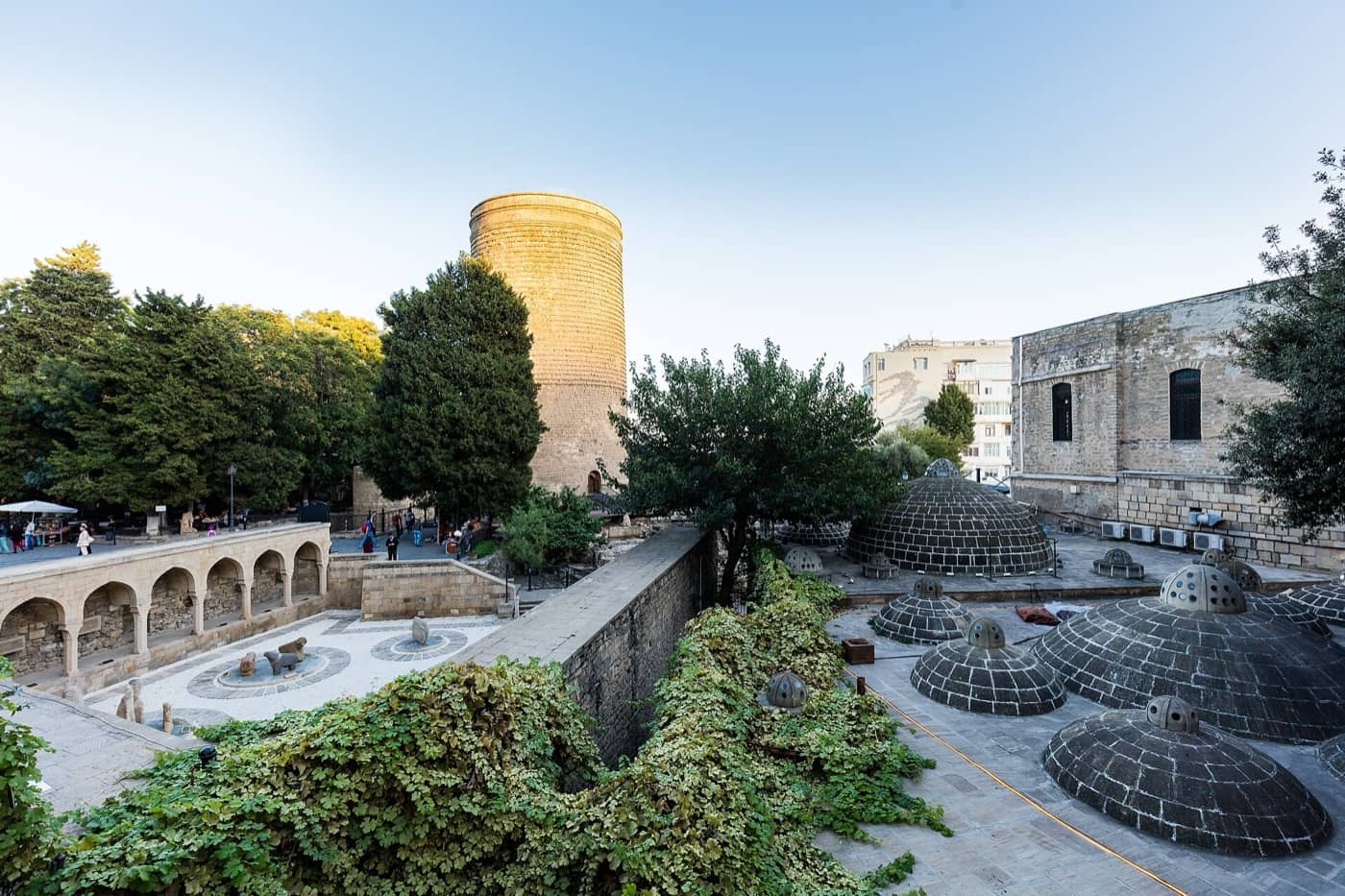
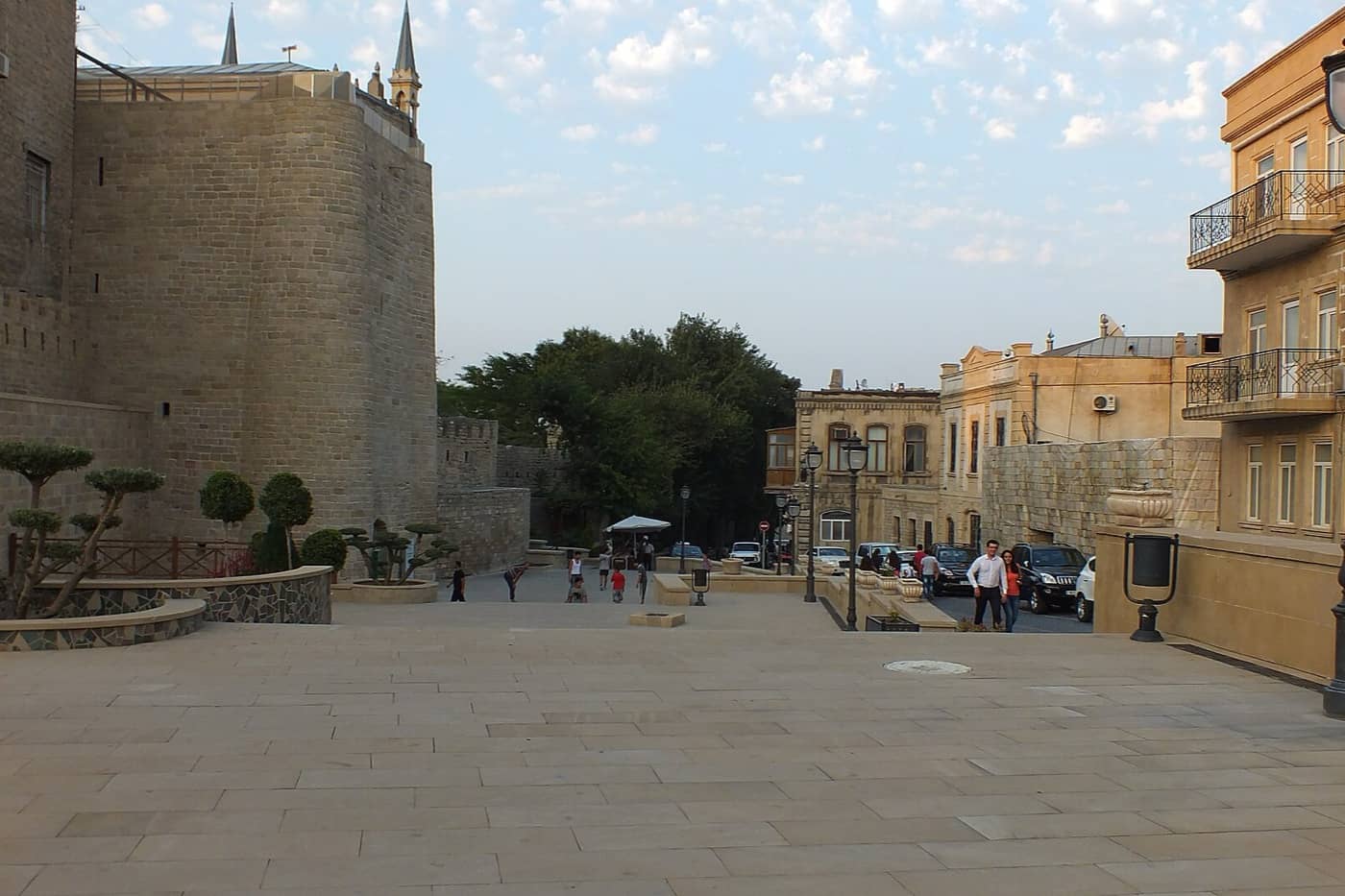
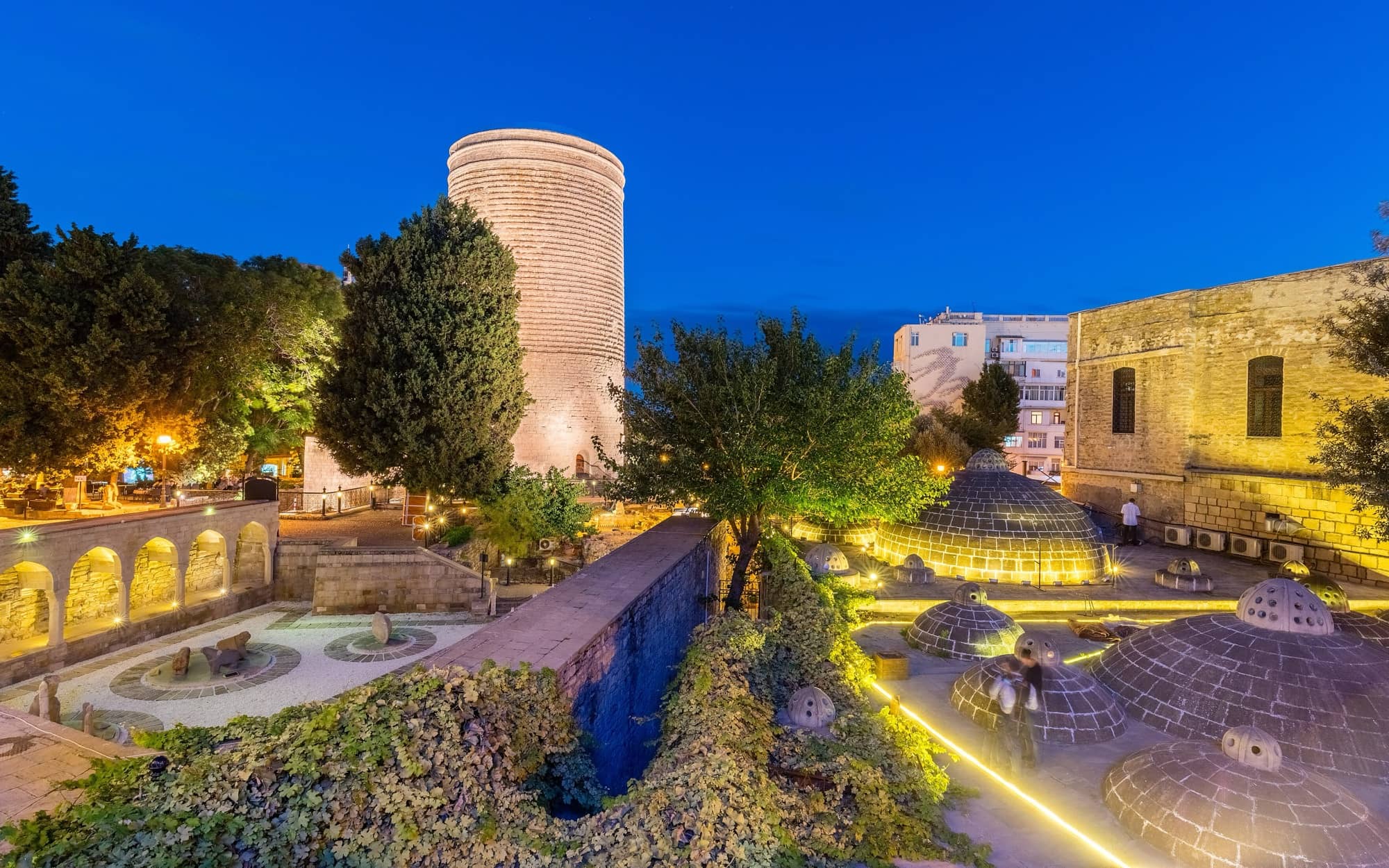
Photographs of Baku by their creators — photo credits.