Interlaken
Bernese Oberland, Switzerland
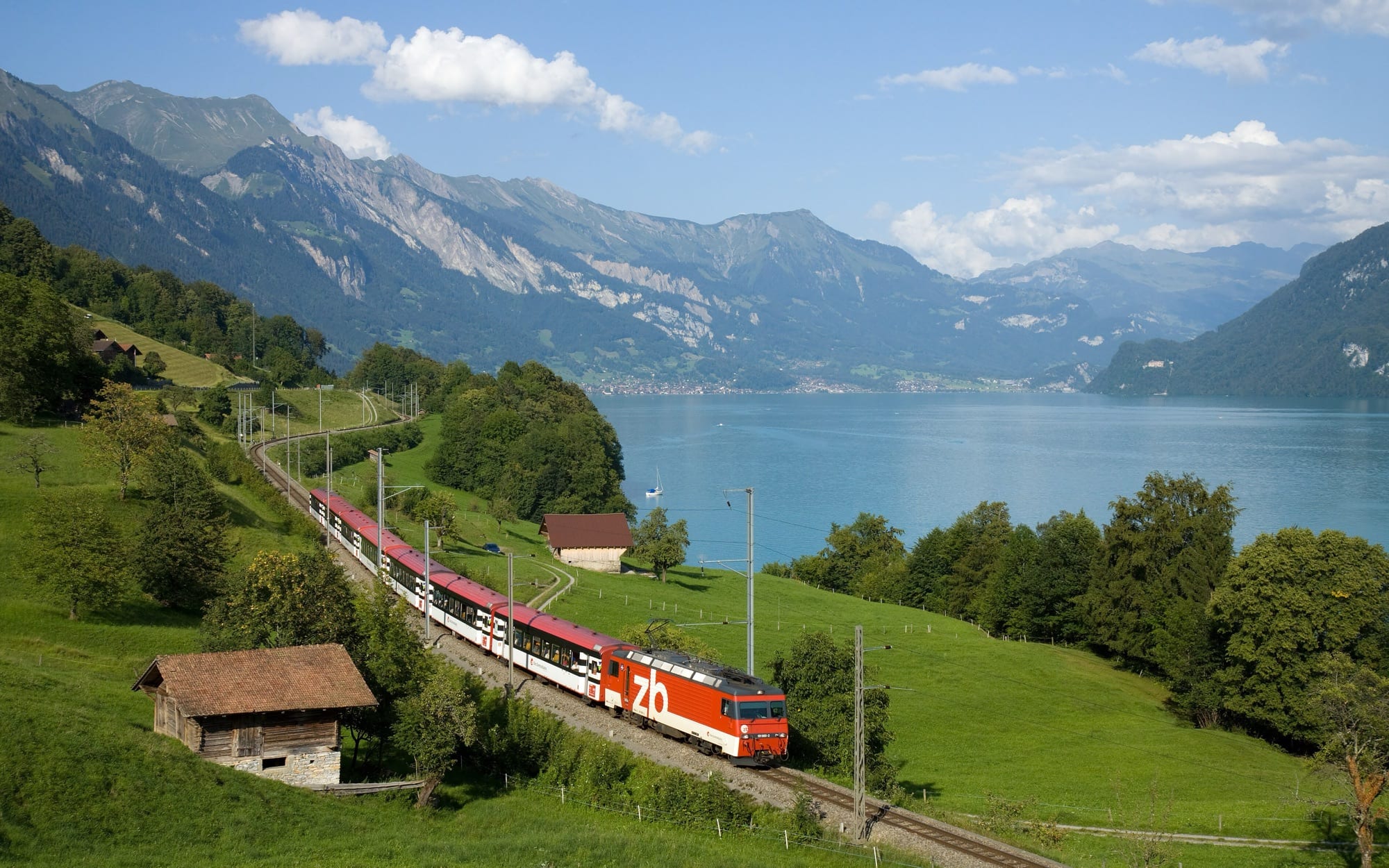
A town on the flat strip between two lakes at 570 m, with the Eiger, Mönch and Jungfrau standing behind it and a railway that runs to 3,454 m.
- Visa before travel
- Hill stations
- Adventure
- Trips here
- On request
- From
- On request
- Next departure
- On request
- Country
- Switzerland
Practical facts for Interlaken
Season, route in, and what an Indian passport needs at the border. Rules change — confirm the visa position close to your departure.
Best time to go
June to September for hiking, with the high trails clear from late June and the alpine flowers at their best in July. December to March for skiing at Grindelwald, Wengen and Mürren. Late April, May and November are shoulder — many mountain lifts close for maintenance and some villages effectively shut, so check what is running before you commit to those dates.
Getting there
Fly to Zurich (ZRH) — non-stop from Delhi in about 8h30 and Mumbai in about 9h — or to Geneva (GVA) one-stop. From Zurich airport, Interlaken Ost is a little over two hours by train with one change at Bern; from Geneva it is about two and three-quarter hours. Trains run at least hourly and the Swiss Travel Pass covers this plus most mountain lifts at a discount; work out whether it beats point-to-point tickets for your itinerary before buying.
Good to know
Visa before travelVisa: Indian nationals need a Schengen visa. Apply through the Swiss consulate's appointment system (handled by VFS in most Indian cities), with biometrics in person, confirmed flights and accommodation, travel insurance with minimum €30,000 medical cover, and six months of bank statements. Appointments are the bottleneck, not the decision: allow 45 to 60 days from starting the process to holding the visa, and more in the March–June rush.
- Currency:
- Swiss franc (CHF). Switzerland is not in the EU and does not use the euro, though euros are sometimes accepted at a poor rate. Cards work everywhere.
- Rough daily budget:
- ₹6,000–10,000 per person for meals and incidentals outside a package — this is the most expensive destination on this list by a wide margin. Supermarket lunches (Coop, Migros) and a packed picnic on hiking days are what most travellers actually do.
No fixed dates in Interlaken yet
We run Interlaken privately, on your dates, until the fixed departures are set.
Ask us for Interlaken dates
We publish a departure only once the season, the stay and the guide are settled. Until then we run private versions — same leaders, your dates.
- A planner calls you back, usually the same working day.
- Tell us the month and we will say if it is the wrong one.
- You hear from us first when the fixed dates go live.
Talk it through first
A planner calls you back, no obligation.
What to know about Interlaken
Interlaken sits on the alluvial flat between Lake Thun and Lake Brienz — literally "between the lakes" — and exists as a base rather than a destination in itself. What it is a base for is the Jungfrau region, which is the most concentrated piece of accessible high alpine scenery in Europe.
The three peaks on the skyline are the Eiger at 3,967 m, the Mönch at 4,107 m and the Jungfrau at 4,158 m, and the Jungfrau railway tunnels through the first two of them to reach the Jungfraujoch at 3,454 m — the highest railway station in Europe, opened in 1912, with an ice palace and a view down the Aletsch glacier, the longest in the Alps and a UNESCO World Heritage Site. It is expensive, it is busy, and on a clear day it is worth it.
Below that, the valleys do most of the work. Lauterbrunnen is a trench walled by cliffs with seventy-two waterfalls falling into it, including Staubbach dropping nearly 300 m clear of the rock; Grindelwald is the walking and skiing base under the Eiger north face; Mürren and Wengen are car-free villages on the shelves above. Schilthorn at 2,970 m has the revolving restaurant and the 360-degree panorama. Paragliding off Beatenberg over the lakes is the standard Interlaken adrenaline hour.
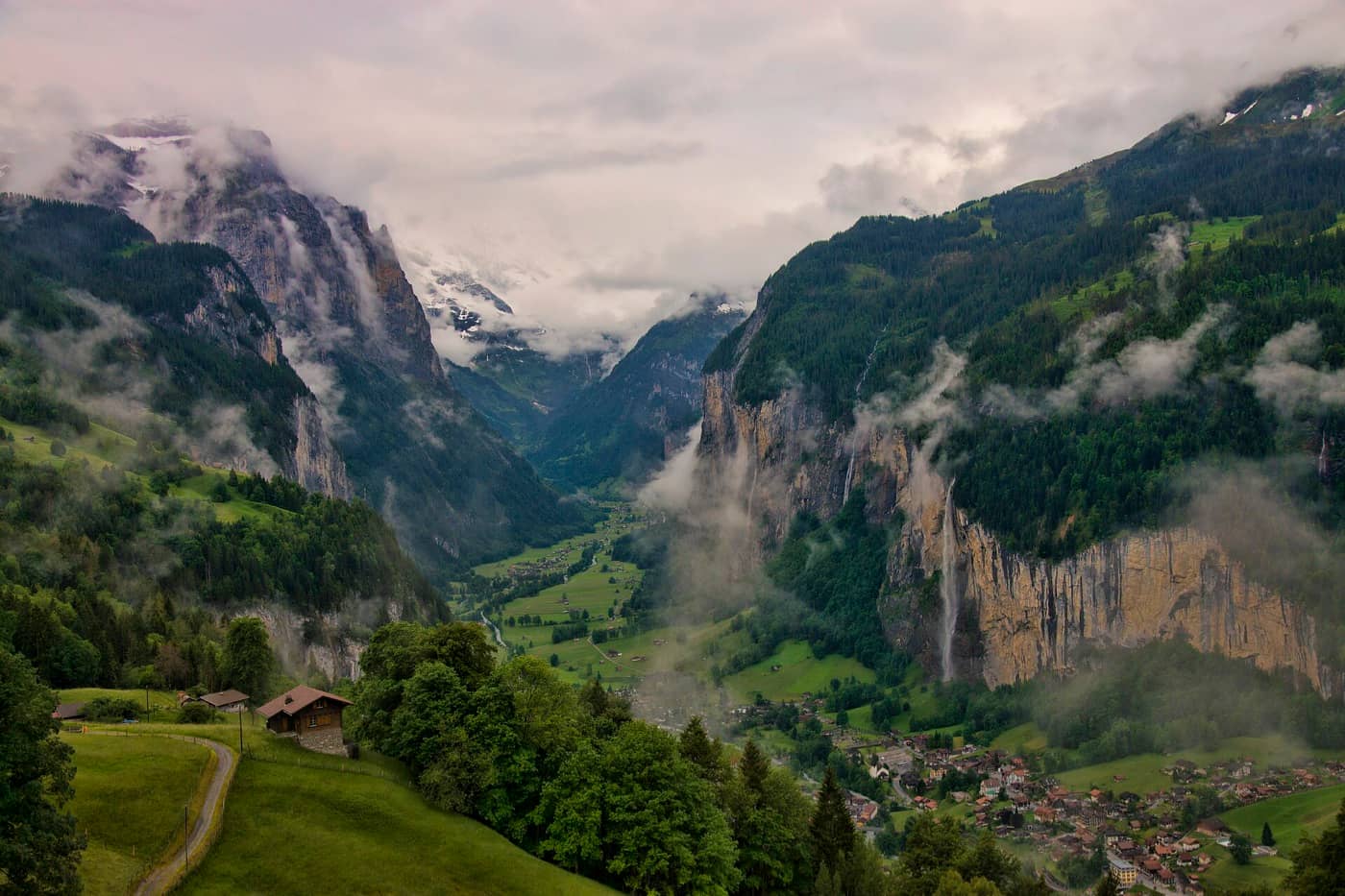
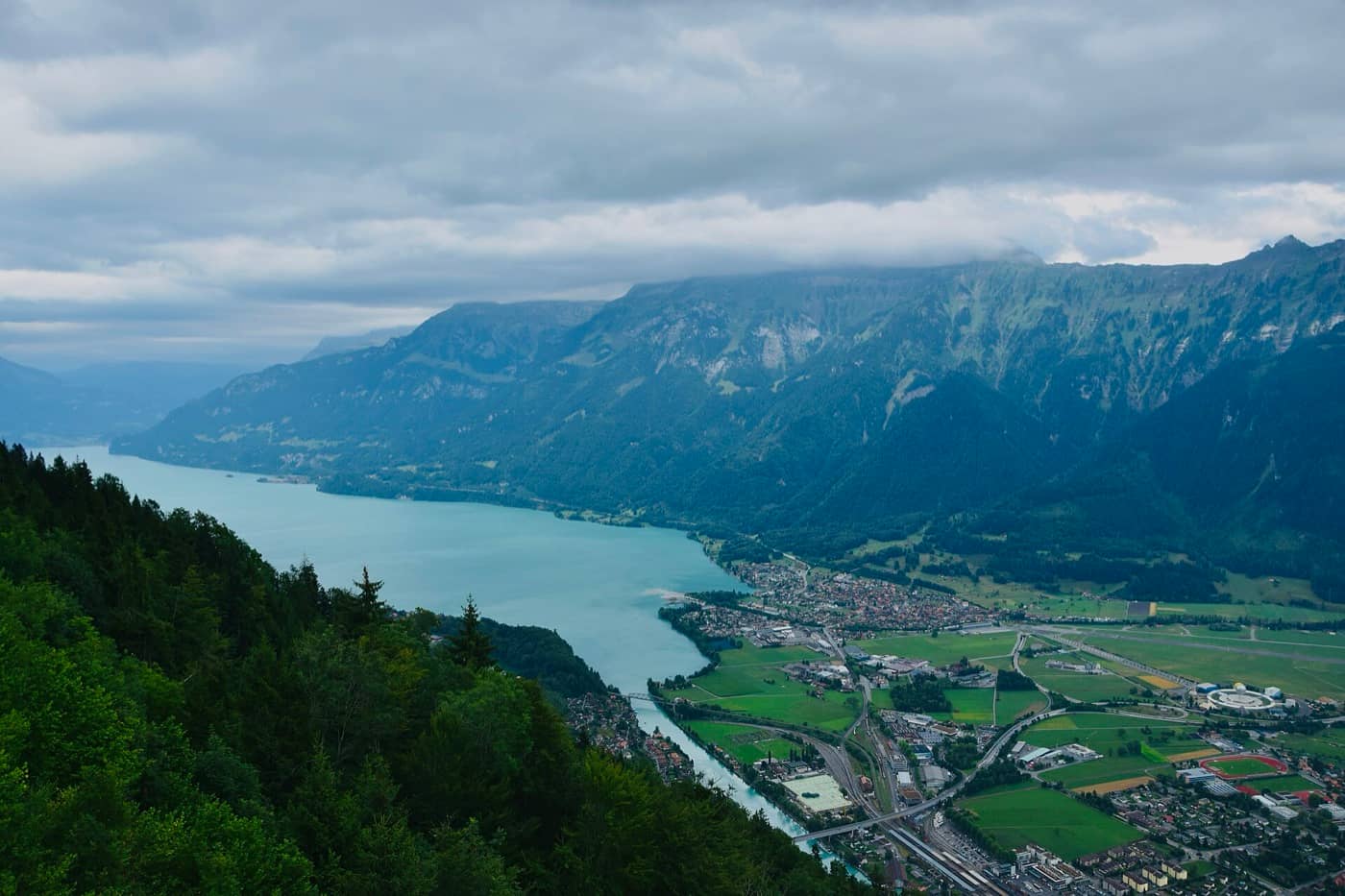
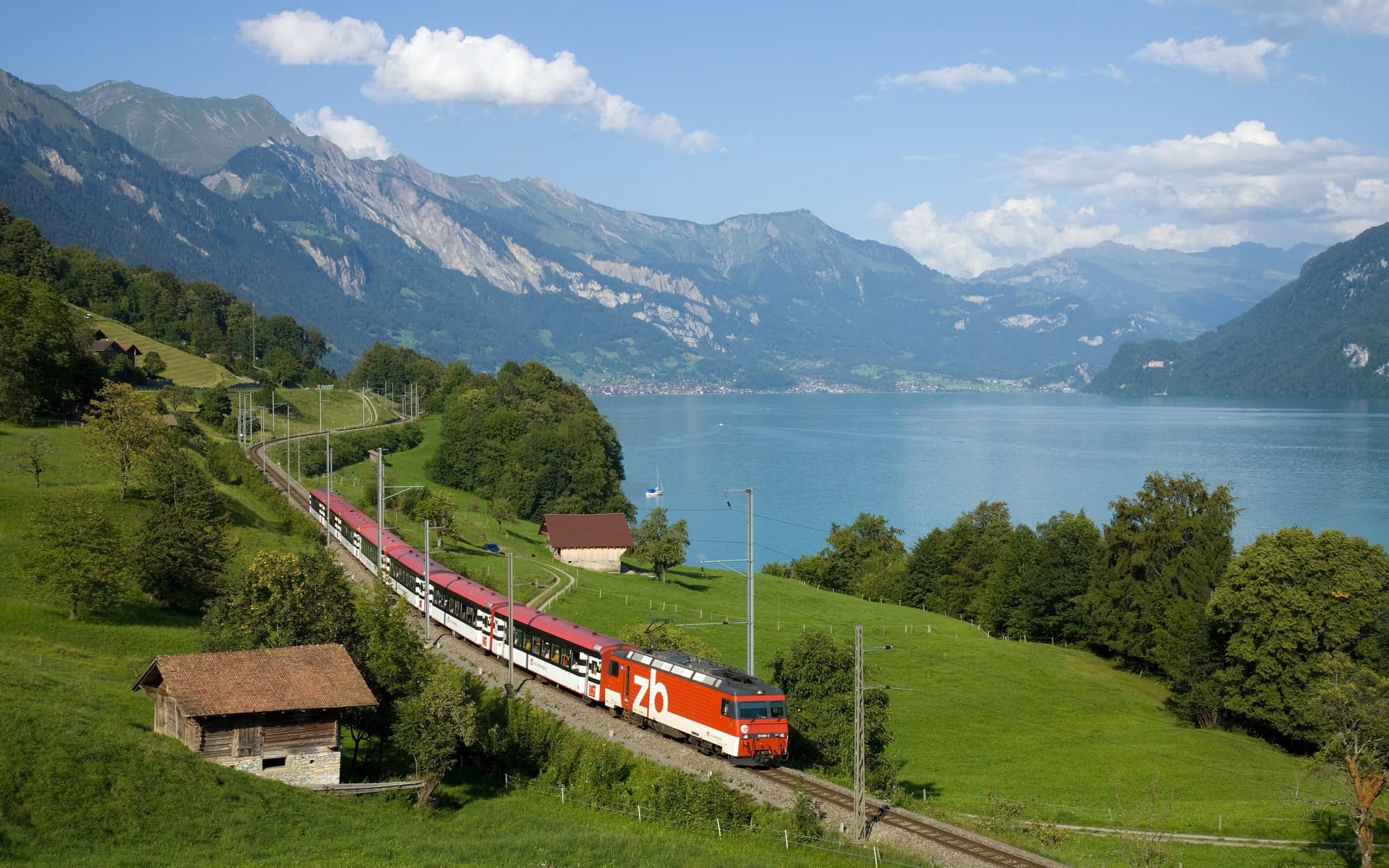
Photographs of Interlaken by their creators — photo credits.